Fire Safety for Multi-Tenant Buildings: What Property Managers Need to Know

Managing a multi-tenant property comes with unique fire safety challenges. Whether the building houses offices, retail spaces, apartments, mixed-use tenants, or industrial occupants, protecting lives and property requires more than simply installing a fire alarm system. It demands ongoing coordination, regular inspections, compliance management, and proactive maintenance.


Because multiple occupants share the same structure, a single fire safety failure can affect dozens—or even hundreds—of people. That's why building owners, property managers, and facility teams must take a comprehensive approach to fire and life safety.


Why Multi-Tenant Buildings Require Special Attention

Unlike single-occupancy facilities, multi-tenant properties often involve:

  • Multiple businesses or residents
  • Shared common areas
  • Varying occupancy schedules
  • Different fire risks among tenants
  • Multiple points of entry and exit
  • Complex fire protection systems


These factors make communication, maintenance, and code compliance especially important. A fire safety strategy must account for the needs of the entire building, not just individual tenant spaces.


Maintain Fire Alarm Systems Year-Round

Fire alarm systems provide early warning during an emergency, giving occupants valuable time to evacuate safely.


For multi-tenant buildings, regular fire alarm testing and maintenance are critical because occupants rely on these systems to receive immediate notification when a fire occurs. Routine inspections help identify malfunctioning devices, communication failures, or other issues before an emergency arises. Titan Fire & Life Safety provides fire alarm testing, maintenance, inspections, and monitoring services designed to help buildings remain protected and compliant.


Property managers should ensure:

  • Annual inspections are completed
  • Deficiencies are corrected promptly
  • Documentation is maintained
  • Monitoring services remain active
  • Tenant renovations do not compromise system performance


Don't Overlook Fire Sprinkler Systems

Fire sprinklers are among the most effective tools for controlling fires before they spread throughout a building.


However, sprinkler systems require ongoing inspection, testing, and maintenance to ensure they function properly when needed. Components such as valves, piping, sprinkler heads, fire pumps, and backflow devices should be inspected according to applicable standards and local requirements.


Regular inspections can help identify:

  • Corrosion
  • Damaged sprinkler heads
  • Closed control valves
  • Water supply issues
  • System impairments


Addressing these issues early helps reduce the risk of system failure during an emergency.


Keep Emergency Lighting and Exit Paths Clear

During a fire or power outage, occupants need clearly marked and illuminated escape routes.


Property managers should routinely inspect:

  • Exit signs
  • Emergency lighting
  • Stairwells
  • Hallways
  • Egress doors


Blocked exits, failed emergency lights, or damaged signage can create dangerous conditions during an evacuation. Regular inspections help ensure occupants can safely leave the building when necessary.


Establish Clear Tenant Responsibilities

One of the most common challenges in multi-tenant buildings is determining who is responsible for specific fire safety obligations.


Property owners and managers should clearly communicate expectations regarding:

  • Storage of combustible materials
  • Electrical safety practices
  • Fire extinguisher accessibility
  • Emergency procedures
  • Reporting fire hazards


Providing tenants with clear guidelines helps reduce risks and encourages shared responsibility for building safety.


Prioritize Fire Extinguisher Maintenance

Fire extinguishers are often the first line of defense against small fires, but only if they are properly maintained and accessible.


Routine inspections should verify:

  • Proper placement
  • Visible signage
  • Adequate pressure levels
  • Current inspection tags
  • No physical damage


Regular extinguisher inspections and maintenance help ensure equipment is ready when needed.


Develop and Review Emergency Response Plans

A fire safety plan should do more than satisfy regulatory requirements—it should provide a practical roadmap for emergency situations.


An effective plan may include:

  • Evacuation procedures
  • Emergency contact information
  • Designated assembly locations
  • Roles and responsibilities
  • Procedures for occupants requiring assistance


Periodic reviews and training can help ensure tenants and staff understand how to respond during an emergency. Fire and life safety consulting services can assist property managers in developing customized emergency plans and compliance strategies.


Stay Ahead of Compliance Requirements

Fire safety regulations can be complex, especially for larger multi-tenant properties.


Requirements often involve:

  • Inspection schedules
  • Testing documentation
  • Equipment maintenance
  • Code updates
  • Fire marshal reviews


Keeping accurate records and partnering with experienced fire protection professionals can help property managers avoid compliance issues, fines, and unnecessary liability. Titan Fire & Life Safety provides inspection, testing, maintenance, consulting, and compliance support services to help buildings remain up to code.


The Value of a Proactive Fire Safety Program

The most effective fire safety programs focus on prevention rather than reaction.


A proactive approach includes:

  • Regular inspections
  • Preventative maintenance
  • Tenant education
  • Emergency planning
  • Ongoing compliance reviews
  • System upgrades when needed


By addressing potential issues before they become emergencies, property owners and managers can better protect occupants, preserve assets, and reduce operational risks.


Protecting People, Property, and Peace of Mind

Fire safety in multi-tenant buildings requires ongoing attention, coordination, and expertise. From fire alarms and sprinkler systems to emergency planning and compliance management, every component plays a critical role in protecting occupants and minimizing risk.


By investing in regular inspections, preventative maintenance, and comprehensive fire and life safety planning, property managers can create safer environments for tenants while ensuring their buildings remain compliant and prepared for the unexpected.
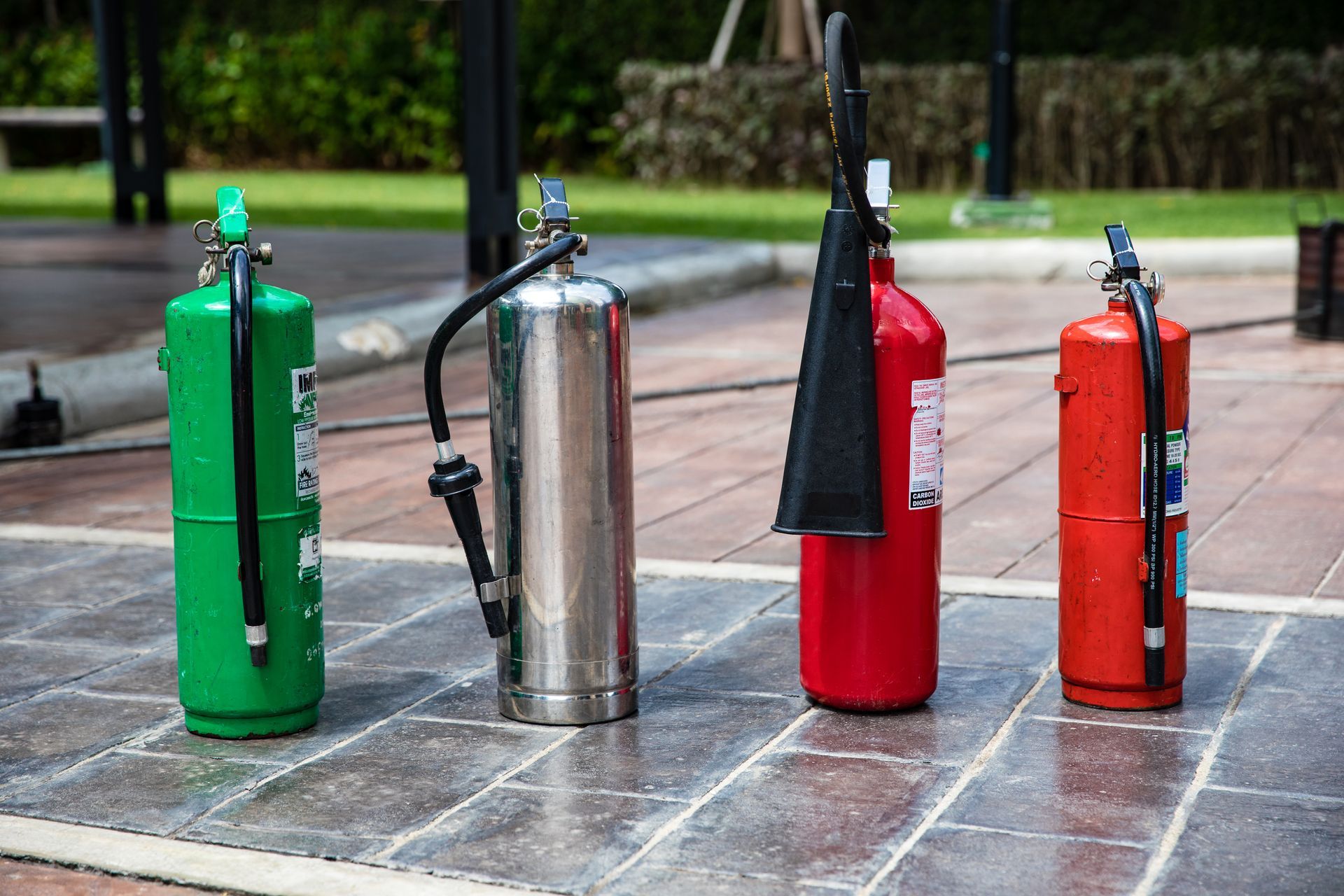
Four standing fire extinguishers in green, silver, red, and orange on a tiled pavement outdoors
April 27, 2026
Learn the different types of fire extinguishers and which one you need for your property. Stay compliant and protected with expert fire safety insights.
A red fire alarm strobe light flashes on a wall in a dim, blurred hallway.
March 30, 2026
Discover the latest fire safety technology every business should know—from smart detection systems to AI and integrated fire protection solutions.
Construction workers wearing hard hats and safety vests stand side-by-side, looking towards the right.
January 26, 2026
Learn how to prepare for a fire marshal inspection with a practical checklist covering alarms, sprinklers, exits, documentation, and life safety compliance.
Red emergency light on a wall in a hospital hallway; two medical workers blurred in the background.
January 22, 2026
Learn how mass notification systems protect people and operations, when to use them, and why fast, multi-channel alerts save lives.
Two construction workers in neon vests carrying lumber in a building. One worker's back is to the camera.
December 17, 2025
Learn how NFPA occupancy and hazard classifications impact fire protection design and why effective fire safety planning is never one-size-fits-all.
Two construction workers examining blueprints, wearing safety vests and gloves.
November 19, 2025
Explore fire suppression beyond sprinklers with gas, foam, and chemical systems. Titan Fire Protection safeguards lives and property in San Diego and beyond.
Burning pile of wood in front of a yellow truck and a building, smoke in the sky.
October 27, 2025
Protect your construction site from fire hazards. Five essential fire safety tips to keep your crew, equipment, and project safe with expert advice from Titan Fire.
Construction worker in a neon vest, working on overhead pipes inside a building.
September 25, 2025
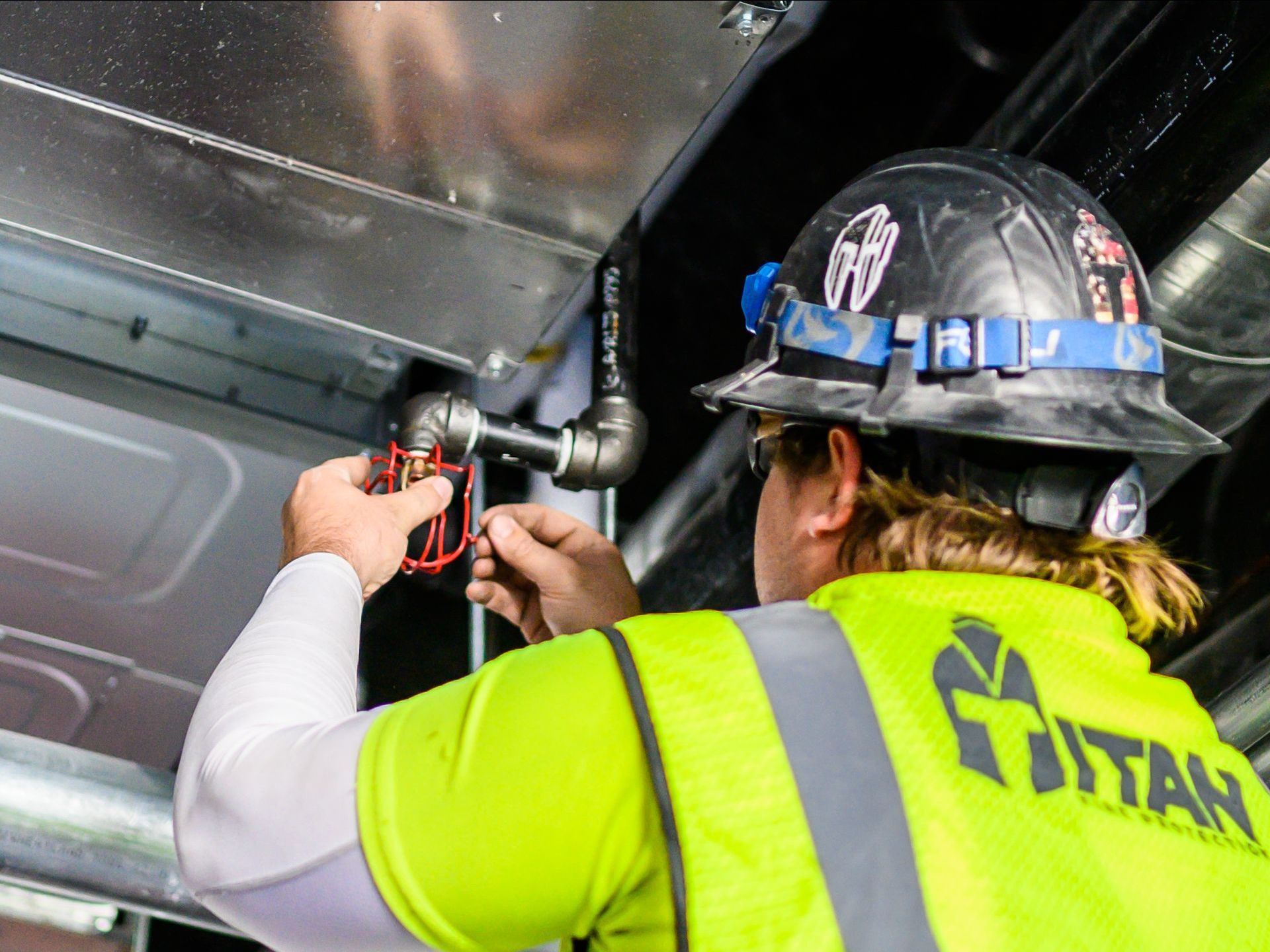
Discover Titan Fire & Life Safety's holistic approach to fire protection, integrating sprinklers, alarms, suppression systems, and training for comprehensive safety.
May 15, 2025
When considering leasing or purchasing a commercial property, it's easy to focus on location, layout, and aesthetics. But one critical factor that often gets overlooked is fire protection . Understanding the fire safety systems in a building before signing on the dotted line can save you time, money, and potential liability down the line. Here’s what you need to know before moving into a new commercial space: 1. Existing Fire Protection Systems Start by identifying what systems are already in place: Fire Sprinklers – Are they present? Are they up to code? When were they last inspected? Fire Alarms – Does the building have a functional fire alarm system with detection devices throughout the property? Fire Extinguishers – Are they properly placed, up to date, and sufficient for the building’s size and use? Fire Suppression Systems – Are there specialized systems installed for kitchens, server rooms, or high-risk areas? Understanding the condition and compliance of these systems helps you assess potential upgrades or repairs before you commit. 2. Inspection & Maintenance Records Ask for records of the most recent fire inspections and maintenance logs. These documents provide insight into: The building’s history of code compliance Any recurring issues or violations How well the current owner or property manager has maintained life safety systems If documentation is missing or incomplete, that’s a red flag that may signal future costs or delays in occupancy. 3. Occupancy Classification and Hazard Use How a building is used plays a significant role in the type of fire protection systems it needs. Is it classified as an office, retail, restaurant, or industrial space? Each occupancy type has its own fire code requirements. For example: A warehouse storing flammable materials will require more robust suppression systems than a general office. A restaurant kitchen needs a UL 300-compliant fire suppression system and sprinklers. Knowing your intended use helps you plan for necessary upgrades and ensures you’re not violating local or national fire codes. 4. Exit Paths and Emergency Lighting Safe evacuation is just as necessary as fire suppression. Before committing to a space, evaluate: The number and placement of exits Whether emergency exit signs and lighting are functional If exit routes are accessible, unblocked, and clearly marked Inadequate egress can be a major code violation and pose serious safety risks for future occupants. 5. Local Fire Code Compliance San Diego has its own fire code requirements based on California and NFPA standards. Before occupying a building, you may need to: Get a fire department inspection Obtain a certificate of occupancy Ensure your space meets ADA and egress requirements Working with a licensed fire protection contractor like Titan Fire & Life Safety can help identify compliance issues early and streamline the permitting process. 6. Future Expansion or Remodeling Considerations If you plan to remodel or expand the space, be aware that structural or occupancy changes can trigger new fire protection requirements. It’s smart to involve fire protection professionals during planning to avoid costly surprises. Final Thoughts Fire protection isn’t just a box to check—it’s a foundational part of building safety, business continuity, and legal compliance. Before signing a lease or purchasing a property, take the time to evaluate its fire safety systems, code compliance, and upgrade potential. At Titan Fire & Life Safety , we offer pre-occupancy evaluations, system inspections, and code consulting to ensure your property is safe, compliant, and ready for business. Need help assessing a new space? Contact Titan Fire & Life Safety today to schedule a fire protection consultation before you move in.
April 7, 2025
Quality, safety, and performance are crucial in the fire protection industry. At Titan Fire & Life Safety, we proudly operate under the merit shop philosophy—a principle that promotes excellence, opportunity, and a results-driven culture. But what does that mean for fire protection professionals, and why does it matter? What Is a Merit Shop? A merit shop is a business that rewards employees and subcontractors based on performance, skill, and contribution—not union affiliation or seniority. This approach emphasizes fairness, individual achievement, and the belief that the best ideas and the hardest workers rise to the top. In practical terms, this means that advancement is earned, not given at Titan. High standards are maintained, and we foster a culture where everyone has the chance to succeed based on their merit. Why It Matters in Fire Protection The merit shop philosophy directly impacts the quality of work in fire protection. Here’s how: 1. Performance-Driven Excellence Merit-based systems naturally push teams to deliver the highest quality of work. Whether it's designing a sprinkler layout or performing a system inspection, every task is done with care, precision, and pride. 2. Faster Innovation and Adaptability A non-union structure allows for quicker decision-making, better communication, and more adaptability in changing environments. This flexibility is especially critical in an industry where codes, technologies, and building requirements evolve rapidly. 3. Opportunities for Growth At Titan, entry-level technicians can work their way up through hands-on experience, training, and certifications. Our team members know they are rewarded for their efforts, which builds motivation and long-term loyalty. 4. Cost-Effective Service for Clients Because we reward productivity and efficiency, clients benefit from streamlined workflows and reduced overhead without compromising on quality or safety. A Culture of Accountability and Empowerment We believe that people perform best when they know their work matters. The merit shop model creates a workplace that values accountability, teamwork, and skill—an ideal foundation for delivering critical life safety services.  Final Thoughts The merit shop model offers the ideal path for fire protection professionals who want to grow their skills, be recognized for their efforts, and be part of a team that values excellence. At Titan Fire & Life Safety, we don’t just install and inspect systems—we build a culture of integrity, professionalism, and opportunity.
Show More